Events
50 teams patched tech conferences in a day. Almost half chose the same problem
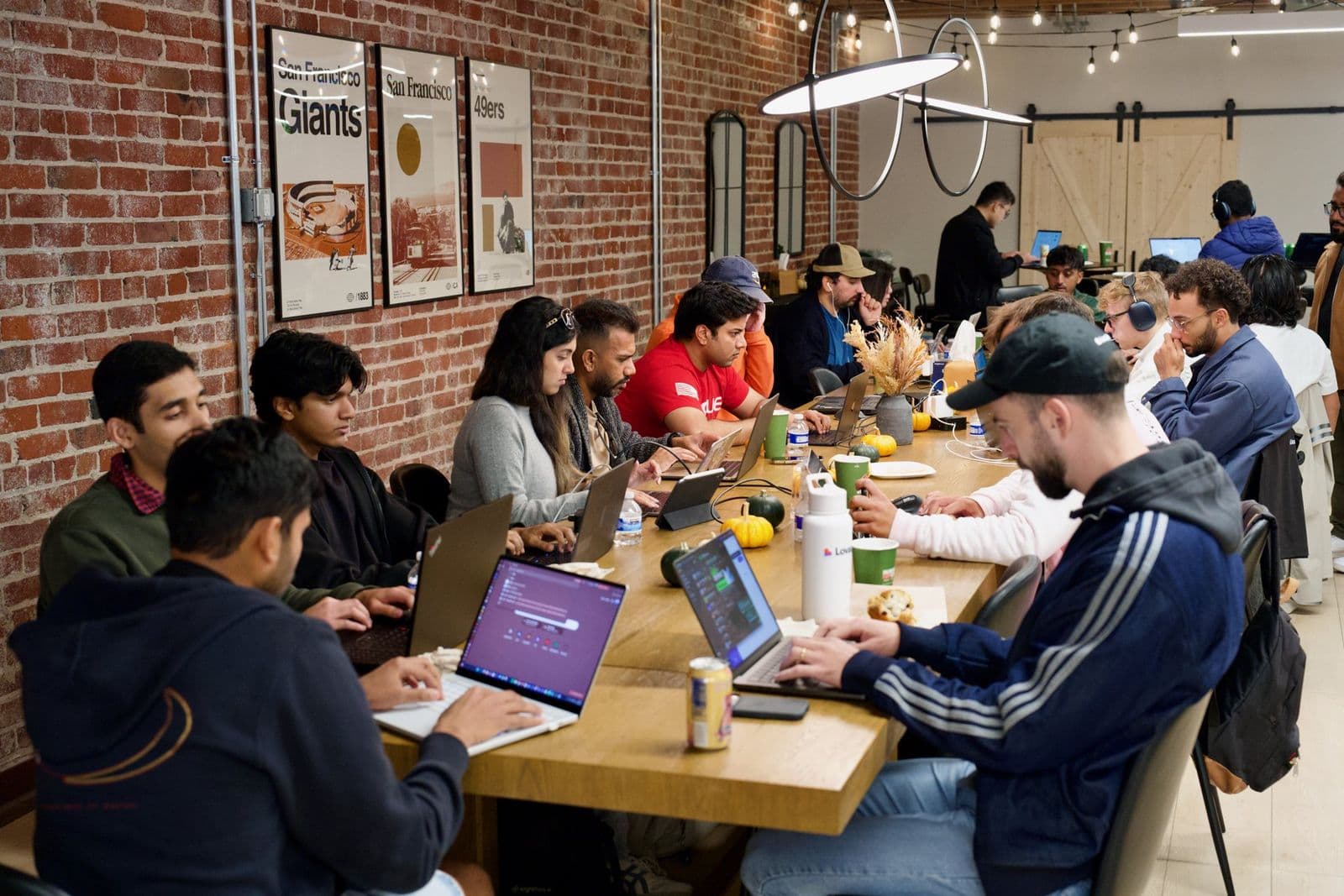
On Saturday, October 24, right before GitHub Universe, 647 developers registered for Patch the Conference in San Francisco. The brief was to patch a real problem with tech conferences.
I opened the day by walking everyone, step by step, through creating a first database on FalkorDB (graph DB for agents). About six hours later, 59 builders on 50 teams demoed. 28 of those projects were live.
Then we read all 50 and sorted them by the main problem each one patched.
| Problem | Projects |
|---|---|
| Who should I meet, and what do I say? | 24 |
| Which conference, talk, or room is worth my time? | 11 |
| How do I keep what I learned and who I met? | 7 |
| What happens when something breaks on the day? | 6 |
| Something else | 2 |
Almost half the room chose one question. Who should I meet?
Why that question needs a graph
Conference data is mostly relationships. A speaker gives a talk on a topic you care about. Someone you met works at that speaker's company. A good intro comes from a chain of facts like that. The strongest projects walked the chain, then showed it to the user as the reason.
Three of them show the range.
Rally, by Matei Olaru, Michael Greenberg, and Paul Seufert. Rally won our prize for best use of the database. It models a trade show with 1,000 attendees and makes each of 10 topics its own relationship type. After a meeting, both people answer a short survey, and each "I learned from them" becomes an edge. algo.pageRank on a topic then ranks who people really learn from, so expertise comes from peers and job titles stop mattering. algo.maxFlow plans each round of meetings with a fairness floor.
Throughline, by Vasudha Jain and Akshay Prajapati. A schedule never says what a talk assumes you know. Throughline maps 125 GitHub Universe talks and 55 concepts, then builds a study path for the talk you pick. For one workshop, a newcomer gets 4 steps and someone with experience gets 1. The agent's queries run read-only on a copy with no attendee data, so it cannot read anyone else's details.
Unstuck Live, by Ananta Verma. I run hands-on sessions, so I know this problem. An instructor sees raised hands but cannot tell if ten errors share one cause. Unstuck finds the setup fact that every stuck person shares. In the demo, all 6 failing attendees used a retired endpoint and 0 of the 19 who passed did. The organizer approves one fix for everyone.
Two more show how far the idea goes. BumpMyAgent by Oscar Hong finds the shortest chain of people between you and someone you want to meet. Capy Pals by Nelson Lai finds the speaker who already solved your problem, from a graph of 2,393 entities and 1,911 facts.
What builders told us
We asked every team what they liked about the database. 46% brought up multi-hop paths, 38% named Cypher, and 38% said it was easy or natural to work with.
So my advice stays simple. Get a first database running in a few minutes. Then write one query that crosses two relationships.
What I would keep from the day
The best projects did the same three things. They returned the path behind each answer. They wrote what users did back into the graph as memory. They kept agents on read-only queries.
The full recap on the company blog has the code and videos: Patch the Conference recap.