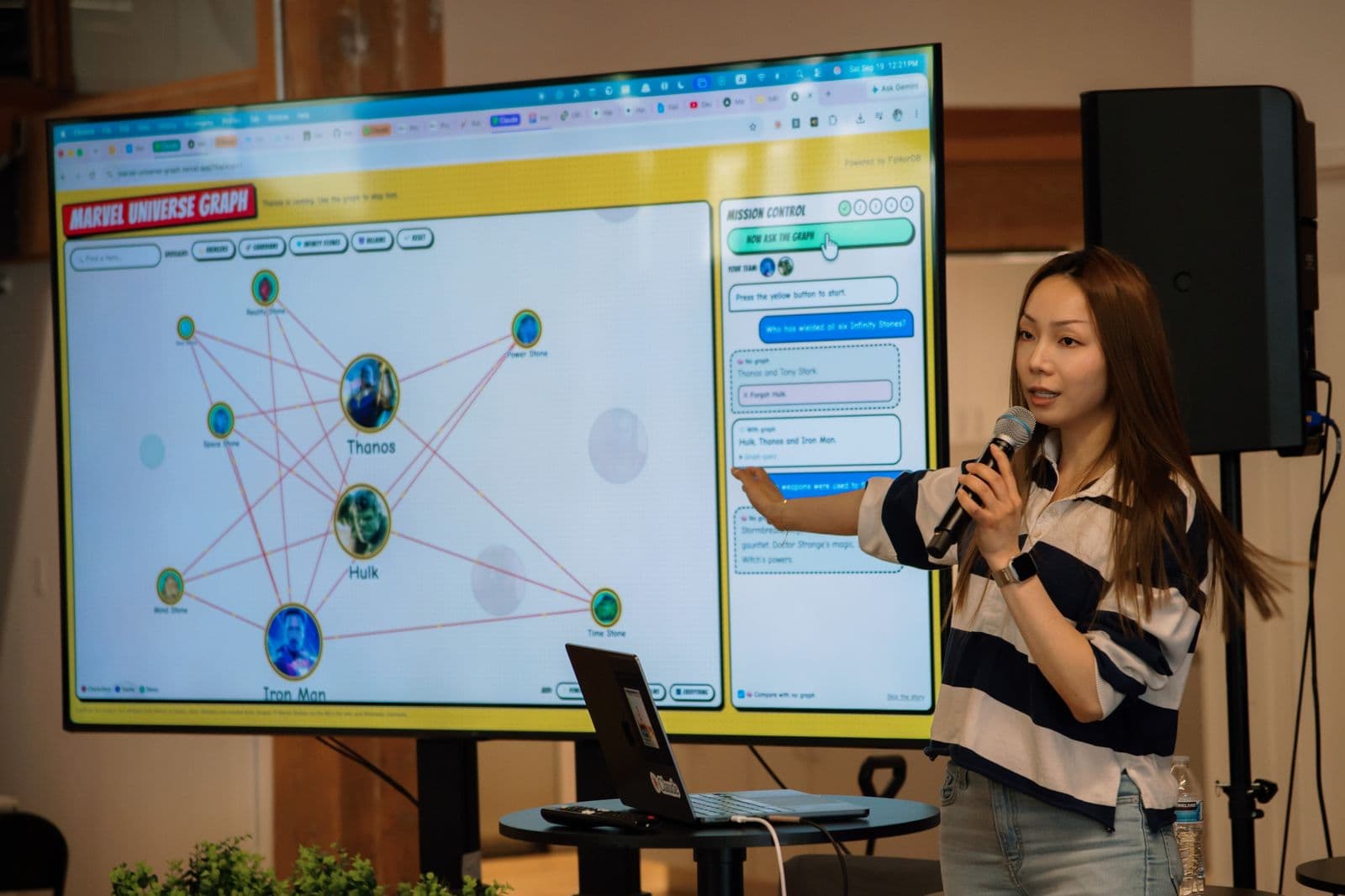
- Ran Graph Hacks, where 7,899 developers built 1,213 projects and 647 teams built agent memory on FalkorDB on one track alone.
- Ran Patch the Conference before GitHub Universe: 647 registered, 50 teams demoed, and 28 projects deployed live in one day.
- Built and open-sourced agent-memory-bench, which measured 4.5x fewer tokens for the same agent conversation and compares FalkorDB, Neo4j, Memgraph, and SQLite.
- Gave Memory Engineering for Long-Running AI Agents at SF Tech Week, built on my open benchmark: 20M vs 4.4M tokens for the same conversation.
- Published 7 technical posts on the FalkorDB blog in 5 weeks, hosted the FalkorDB agent memory podcast, and improved product docs through pull requests.
Experience
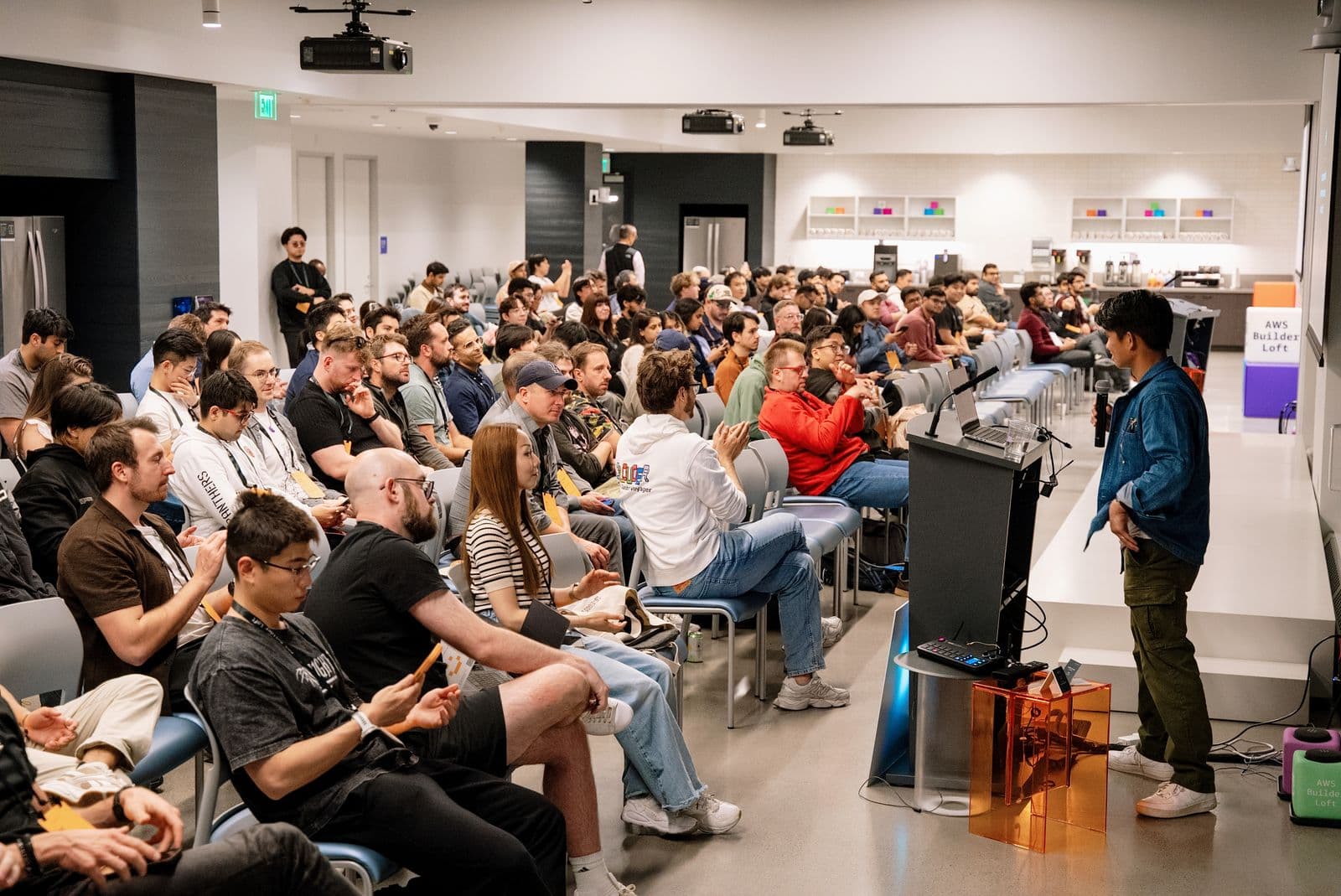
- Founded a Bay Area community for multimodal AI builders and built the events program from zero.
- Built multimodalsociety.com: a live list of Bay Area AI events, a library of tutorials, member sign-up, and project galleries.
- Co-hosted Agent Memory Night, which drew 652 sign-ups and ranked in the top 6% of all SF Tech Week events, with speakers from Cognee, TwelveLabs, and GMI Cloud.
- Produced an AI Filmmaking Masterclass + Hackathon with partners ElevenLabs, Tripo3D, GMI Cloud, and Magnific: 22 projects by 44 makers in one afternoon.
- Wrote comfyui-dailies, a ComfyUI custom node that records the lineage of every generated video, and dailies, a CLI and Claude Code skill that triages generated video takes.
- Wrote 30+ technical deep dives on AI video workflows, custom nodes, and model releases.
Developer Advocate & Growth Lead
The AI Collective
Dec 2025 – 2026
San Francisco
- Led the San Francisco flagship of Humans in AI Week, a 100+ city global series, with 300 attendees.
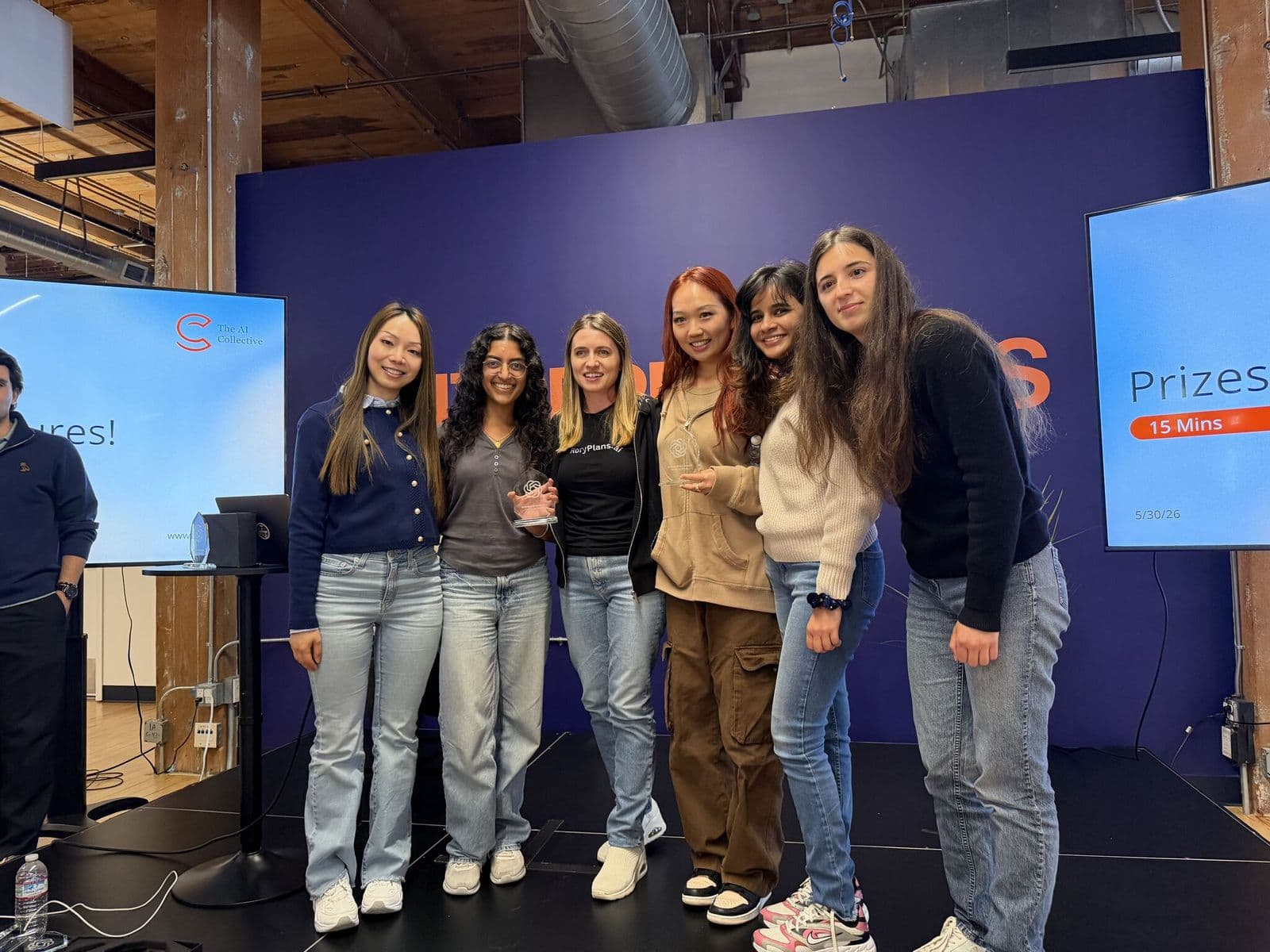
- Ran SF Demo Night at AWS: 240 attendees, 12 startups pitched to a VC panel, sold out in 5 days.
- Ran hackathons and launch events with OpenAI, Google, and OpusClip, so that developers built against new APIs on launch day. The OpenAI Business Hackathon drew 210 registrations and 26 demoed projects.
- Spoke and live-demoed at the AI Dev Summit and at meetups across a 250k-member developer community.
- Created developer content on X, YouTube, and LinkedIn that lifted event registrations by 30%+.
Co-founder & CTO
OneLuka
Jul 2025 – Mar 2026
San Francisco
- Took an AI legal tech product from 0 to production in under a month, on AWS, with sub-5s response times for multi-step agent workflows.
- Architected a RAG-backed system of 7+ agents for immigration petition drafting, cutting prep time by 95% and client costs by ~80%.
- Ran 40+ live demos and discovery calls and turned the feedback into roadmap changes, growing to 2,000+ users at a 60%+ demo-to-trial rate.
- Designed the API surface for a multi-agent marketing pipeline in TypeScript with Zod contracts, running under 3 seconds end to end across 5 agent types.
- Built autonomous agents that generate, test, and optimize landing pages in real time, with Thompson sampling to pick the best variant for each visitor type.
- Cut new-engineer ramp time by ~40% with internal developer docs and REST API integration guides adopted across 5+ engineering teams.
- Built pipelines processing 10M+ daily events on Spark, Airflow, AWS, and Databricks at 99.9%+ uptime.
- Cut ETL pipeline failure rate from ~8% to under 1% with Spark and Python pipelines, automated monitoring, and CI/CD.
Software Engineer
IAV Automotive / TU Berlin
Jun 2017 – Jan 2019
Berlin, Germany
- Built real-time routing algorithms using evolutionary algorithms for autonomous-driving simulations on 100K+ node road networks, beating published research benchmarks by 17%.